Showing posts with label United Nations. Show all posts

Thursday, November 30, 2017

1 in 4 LGBTI people report discrimination in 2016 - SPECIAL REPORT

A disturbing report was issued by the Center for American Progress about LGBTI discrimination. 1 in 4 LGBT people report experiencing discrimination in 2016.

"This is clearly unacceptable and we must eliminate the Kentucky Religious Freedom Act. We call on the Kentucky Supreme Court to overturn this legislation which is effectively a license to discriminate," stated Jordan Palmer, secretary-general of Kentucky Equality Federation, Marriage Equality Kentucky, Southeastern Kentucky Stop Hate Group, Be Proud - Western Kentucky, Kentucky HIV Advocacy Campaign, Kentucky Equal Ballot Access, and others combined together in the Earth Equality Alliance.

Over the past decade, the nation has made unprecedented progress toward LGBTI equality. But to date, neither the federal government nor most states (including the Commonwealth of Kentucky - http://kentucky.gov) have explicit statutory nondiscrimination laws protecting people on the basis of sexual orientation and gender identity. LGBTI people still face widespread discrimination: Between 11 percent and 28 percent of LGBTI workers report losing a promotion simply because of their sexual orientation, and 27 percent of transgender workers report being fired, not hired, or denied a promotion in the past year. Discrimination also routinely affects LGBTI people beyond the workplace, sometimes costing them their homes, access to education, and even the ability to engage in public life.

Data from a nationally representative survey of LGBTI people conducted by CAP shows that 25.2 percent of LGBTI respondents has experienced discrimination because of their sexual orientation or gender identity in the past year. The January 2017 survey shows that, despite progress, in 2016 discrimination remained a widespread threat to LGBTI people’s well-being, health, and economic security.

Among people who experienced sexual orientation- or gender-identity-based discrimination in the past year:
  • 68.5 percent reported that discrimination at least somewhat negatively affected their psychological well-being. 
  • 43.7 percent reported that discrimination negatively impacted their physical well-being. 
  • 47.7 percent reported that discrimination negatively impacted their spiritual well-being. 
  • 38.5 percent reported discrimination negatively impacted their school environment. 
  • 52.8 percent reported that discrimination negatively impacted their work environment. 
  • 56.6 report it negatively impacted their neighborhood and community environment. 

Unseen harms
LGBTI people who don’t experience overt discrimination, such as being fired from a job, may still find that the threat of it shapes their lives in subtle but profound ways. David M., a gay man, works at a Fortune 500 company with a formal, written nondiscrimination policy. “I couldn’t be fired for being gay,” he said. But David went on to explain, “When partners at the firm invite straight men to squash or drinks, they don’t invite the women or gay men. I’m being passed over for opportunities that could lead to being promoted.”

“I’m trying to minimize the bias against me by changing my presentation in the corporate world,” he added. “I lower my voice in meetings to make it sound less feminine and avoid wearing anything but a black suit. … When you’re perceived as feminine—whether you’re a woman or a gay man—you get excluded from relationships that improve your career.”

David is not alone. Survey findings and related interviews show that LGBTI people hide personal relationships, delay health care, change the way they dress, and take other steps to alter their lives because they could be discriminated against.

Maria S., a lesbian who lives in North Carolina, described a long commute from her home in Durham to a different town where she works. She makes the drive every day so that she can live in a city that’s friendly to LGBTI people. She loves her job, but she’s not out to her boss. “I wonder whether I would be let go if the higher-ups knew about my sexuality,” she says.

CAP’s research shows that stories such as Maria’s and David’s are common. The below table shows the percentage of LGBTI people who report changing their lives in a variety of ways in order to avoid discrimination.

Click to make larger.

As Table 1 shows, LGBTI people who’ve experienced discrimination in the past year are significantly more likely to alter their lives for fear of discrimination, even deciding where to live and work because of it, suggesting that there are lasting consequences for victims of discrimination. Yet findings also support the contention that LGBTI people do not need to have experienced discrimination in order to act in ways that help them avoid it, which is in line with empirical evidence on a component of minority stress theory: expectations of rejection.

Not only can threatened discrimination bar LGBTI people from living authentically—it can also deny them material opportunities. Rafael J.,* a gay student in California, told CAP that he “decided to apply to law schools only in LGBTI-safe cities or states,” denying him the opportunity pursue his graduate education at schools he might otherwise have applied to. “I did not think I would be safe being an openly gay man,” he said. “Especially a gay man of color, in some places.”

Unique vulnerabilities in the workplace
Within the LGBTI community, people who were vulnerable to discrimination across multiple identities reported uniquely high rates of avoidance behaviors.

In particular, LGBTI people of color were more likely to hide their sexual orientation and gender identity from employers, with 12 percent removing items from their resumes—in comparison to 8 percent of white LGBTI respondents—in the past year.

Similarly, 18.7 percent of 18- to 24-year-old LGBTI respondents reported removing items from their resumes—in comparison to 7.9 percent of 35- to 44-year-olds.

Meanwhile, 15.5 percent of disabled LGBTI respondents reported removing items from their resume—in comparison to 7.3 percent of nondisabled LGBTI people. This finding may reflect higher rates of unemployment among people of color, disabled people, and young adults; it may also reflect that LGBTI people who could also face discrimination on the basis of their race, youth, and disability feel uniquely vulnerable to being denied a job due to discrimination, or a combination of factors.

Unique vulnerabilities in the public square
Discrimination, harassment, and violence against LGBTI people—especially transgender people—has always been common in places of public accommodation, such as hotels, restaurants, or government offices. The 2015 United States Transgender Survey found that, among transgender people who visited a place of public accommodation where staff knew or believed they were transgender, nearly one in three experienced discrimination or harassment—including being denied equal services or even being physically attacked.

In March 2016, then North Carolina Governor Pat McCrory signed H.B. 2 into law, which mandated anti-transgender discrimination in single-sex facilities—and began an unprecedented attack on transgender people’s access to public accommodations and ability to participate in public life.

That year, more than 30 bills specifically targeting transgender people’s access to public accommodations were introduced in state legislatures across the country. This survey asked transgender respondents whether they had avoided places of public accommodation from January 2016 through January 2017, during a nationwide attack on transgender people’s rights.

Among transgender survey respondents:
  • 25.7 percent reported avoiding public places such as stores and restaurants, versus 9.9 percent of cisgender LGBTI respondents 
  • 10.9 percent reported avoiding public transportation, versus 4.1 percent of cisgender LGBTI respondents 
  • 11.9 percent avoided getting services they or their family needed, versus 4.4 percent of cisgender LGBTI respondents 
  • 26.7 percent made specific decisions about where to shop, versus 6.6 percent of cisgender LGBTI respondents These findings suggest that ongoing discrimination in public accommodations pushes transgender people out of public life, making it harder for them to access key services, use public transportation, or simply go to stores or restaurants without fear of discrimination. 

Disabled LGBTI people were also significantly more likely to avoid public places than their nondisabled LGBTI counterparts. Among disabled LGBTI survey respondents, in the past year:

  • 20.4 percent reported avoiding public places such as stores and restaurants, versus 9.1 percent of nondisabled LGBTI respondents
  • 8.8 percent reported avoiding public transportation, versus 3.6 percent of nondisabled LGBTI respondents
  • 14.7 percent avoided getting services they or their family needed, versus 2.9 percent of nondisabled LGBTI respondents
  • 25.7 percent made specific decisions about where to shop, versus 15.4 percent of nondisabled LGBTI respondents


This is likely because, in addition to the risk of anti-LGBTI harassment and discrimination, LGBTI people with disabilities contend with inaccessible public spaces. For example, many transit agencies fail to comply with Americans with Disabilities Act, or ADA, requirements that would make public transportation accessible to people with visual and cognitive disabilities.

Unique vulnerabilities in health care 
In 2010, more than half of LGBTI people reported being discriminated against by a health care providers and more than 25 percent of transgender respondents reported being refused medical care outright. Since then, LGBTI people have gained protections from health care discrimination—most notably, regulations stemming from the Affordable Care Act, or ACA, have prohibited federally funded hospitals, providers, and insurers from discriminating against LGBTI patients. Despite progress, LGBTI people, and transgender people in particular, remain vulnerable to healthcare discrimination: In 2015, one-third of transgender people who saw a health care provider reported “at least one negative experience related to being transgender.” These negative experiences included being refused treatment or even being physically assaulted. Transgender people of color and people with disabilities reported particularly high rates of discrimination from health care providers.

Unsurprisingly, people in these vulnerable groups are especially likely to avoid doctor’s offices, postponing both preventative and needed medical care:
  • 23.5 percent of transgender respondents avoided doctors’ offices in the past year, versus 4.4 percent of cisgender LGBTI respondents 
  • 13.7 percent of disabled LGBTI respondents avoided doctors’ offices in the past year, versus 4.2 percent of nondisabled LGBTI respondents 
  • 10.3 percent of LGBTI people of color avoided doctors’ offices in the past year, versus 4.2 percent of white LGBTI respondents 

These findings are consistent with research that has also identified patterns of health care discrimination against people of color and disabled people. For example, one survey of health care practices in five major cities found that more than one in five practices were inaccessible to patients who used wheelchairs.

A call to action 
To ensure that civil rights laws explicitly protect LGBTI people, Congress and all States should pass an Equality Act, a comprehensive bill banning discrimination based on sexual orientation and gender identity in employment, public accommodations, housing, credit, and federal funding, among other provisions.

*Authors’ note:  All names have been changed out of respect for interviewees’ privacy.

Methodology 
To conduct this study, CAP commissioned and designed a survey, fielded by Knowledge Networks, which surveyed 1,864 individuals about their experiences with health insurance and health care. Among the respondents, 857 identified as lesbian, gay, bisexual, and/or transgender, while 1,007 identified as heterosexual and cisgender/nontransgender. Respondents came from all income ranges and are diverse across factors such as race, ethnicity, education, geography, disability status, and age. The survey was fielded online in English in January 2017 to coincide with the fourth open enrollment period through the health insurance marketplaces and the beginning of the first full year of federal rules that specifically protect LGBT people from discrimination in health insurance coverage and health care. The data are nationally representative and weighted according to U.S. population characteristics. All reported findings are statistically significant unless otherwise indicated. All comparisons presented are statistically significant at the p < .05 level.

Separate from the quantitative survey, the authors solicited stories exploring the impact of discrimination on LGBT people’s lives. Using social media platforms, the study authors requested volunteers to anonymously recount personal experiences of changing their behavior or making other adjustments to their daily lives to prevent experiencing discrimination. Interviews were conducted by one of the study authors and names were changed to protect the identity of the interviewee.

Additional information about study methods and materials are available from the authors.

Wednesday, October 4, 2017

United States votes against LGBTI civil rights at the United Nations

The U.S. on voted against a United Nations Human Rights Council resolution that condemns the #death penalty for those found guilty of committing consensual same-sex sexual acts.

Still, the resolution — which Belgium, Benin, Costa Rica, France, Mexico, Moldova, Mongolia and Switzerland introduced — passed by a 27-13 vote margin.

This leaves nation-states that execute LGBTI people open for sanctions or refusal of aid from the United Nations at the discretion of Secretary-General of the United Nations.

Col. Jordan Palmer with Kentucky Equality Federation and Marriage Equality Kentucky, called the U.S. vote shameful, but not unlike similar resolutions the U.S. also sided with Russia, Iran, and Egypt in the past.

"America will never be “great” again until we deal with human rights," Palmer stated.

Kelly Currie, the U.S. representative to the U.N. Economic and Social Council, attended the event but did NOT speak.

Former U.S. Vice President Biden is among those who spoke at last year’s U.N. LGBT Core Group event.

U.S. Ambassador to the U.N. Nikki Haley (former Governor of the State of South Carolina) in April said the U.S. remains “disturbed” by the ongoing crackdown against gay men and lesbians in Chechnya.

Sunday, March 12, 2017

#UN #Rape #Refugees UN chief's strategy to protect from sexual exploitation and abuse

After a long and humiliating period for member states, the new head of the United Nations, defender of peace and the Declaration of Human Rights is acting to prevent rape and abuse from member states around the World.

United Nations Secretary-General Antonio Guterres, underscoring that the United Nations should not be, in any way, associated with the crimes of rape, sexual violence, exploitation, and abuse, has outlined a new victim-centred approach to prevent and respond to such abuses committed by those serving under the United Nations flag.

"Such acts of cruelty should never take place. Certainly, no person serving with the United Nations in any capacity should be associated with such vile and vicious crimes," said Guterres in a message announcing his report released Thursday on the issue. Let us declare in one voice: We will not tolerate anyone committing or condoning sexual exploitation and abuse. We will not let anyone cover up these crimes with the UN flag."

The secretary-general’s report outlines special measures for protection from sexual exploitation and abuse, and the new approach aims to be victim-centred strategy and is rooted in transparency, accountability and ensuring justice.

Noting that exploitation was also deeply rooted in gender inequality and discrimination, Guterres said that promoting gender equality throughout the UN system, including its missions and peacekeeping forces, would help advance parity and at the same time decrease incidents of abuse.

Based on four tracks, the approach documented in the report focuses on the rights and dignity of victims; ending impunity for those guilty of crimes and abuses; drawing on the wisdom and guidance of all those who have been affected, civil society, local communities and others to strengthen and improve UN's efforts; and to raise awareness and share best practices to end the scourge.

"Privatized U.S. companies who provide security and peacekeeping operations have immunity from prosecution as has been reported many times in addition to multiple reports, books, and movies being made on the subject. No privatized security company or active soldier from the United States, France, Germany, Greece, Italy, or any other UN state should have immunity from prosecution for such barbaric acts," stated Kentucky Equality Federation and United Kentucky Alliance Secretary-General Jordan Palmer for ILGA. "All peacekeeping operations ultimately report to the Office of the Secretary-General, and the Secretary-General along with the United Nations General Assembly should deny immunity to privatized soldiers committing such acts, they should be prosecuted by the International Court of Justice (ICJ), the primary judicial branch of the United Nations, or their home, member state."

Palmer continued, we hope UN Secretary-General Guterres will continue to protect and defend the Universal Declaration of Human Rights, which as former Secretary-General Ban-Ki Moon stated: “To those who are gay, lesbian, bisexual or transgender, let me say — you are not alone. Your struggle for an end to violence and discrimination is a shared struggle. Any attack on you is an attack on the universal values the United Nations and I have sworn to uphold."

United Nations Secretary-General Antonio Guterres included a detailed list of actions, along with the relevant UN entity, that would be responsible for consultation with relevant stakeholders, as well as provides data on allegations of sexual exploitation and abuse across the UN system and by non-UN international forces authorized by a Security Council mandate.

Kentucky Equality Federation Ambassador of Goodwill Melanie Nathan, the executive director of the African Human Rights Coalition added: "LGBTI people aren't protected adequately or in some instances at all by the UN and the states who continue to criminalize people based on sexual orientation and gender identity. We have LGBTI asylum seekers and refugees languishing and suffering violence where host countries continue to allow persecution and United Nations High Commissioner for Refugees is unable to provide adequate security. Hopefully, change will come for all and this is not mere lip service."

#resist, #UN, #rage, #LGBTI, #gay, #refugees

Sunday, May 29, 2016

International Day of UN Peacekeepers

‪#‎Together4Peace‬ ‪#‎UN‬: International Day of UN Peacekeepers 2016. "Today we honor the near 3,500 who have given full measure for the flag of the United Nations, united under a common cause regardless of religion, nationality, race, color, sexual orientation, or any other [dividing] labels bestowed upon fellow Human beings, to maintain peace and safety around the world," stated Kentucky Equality Federation alliance secretary-general Jordan Palmer.

"The organizational and operational skills that our Army has, to include our Army Reserve, is so valuable in an environment where you have [the militaries of] 44 different nations ... trying to come together and function as one," stated U.S. Major General Hugh Van Roosen, the United Nations Force Chief of Staff, was responsible for the daily operation of the 44 country multinational staff serving over 15,000 United Nations Peacekeepers.

Since the first UN peacekeeping mission sixty-eight years ago, civilian and military personnel of the United States have served together under the United Nations flag in cooperation with peacekeepers from around the world, strengthening and deepening the bonds between themselves.

When I first learned as a kid what the United Nations (UN) was, I always felt it would be an incredible opportunity to work for the U.N.,” said Van Roosen. "It's the concept of the United Nations that is so great- although there are challenges and difficulties, the underlying concept is truly the future for our planet."

--> United Nations Secretary-General Ban Ki-moon will preside over a wreath-laying ceremony in honor of all peacekeepers who have lost their lives while serving under the UN flag. In addition, the Dag Hammarskjöld Medal will be awarded posthumously to the peacekeepers who fell while serving in the cause of peace, during 2015. The world leader will also preside over the inaugural ceremony for the 'Captain Mbaye Diagne Medal for Exceptional Courage.’

Monday, September 17, 2012

Kentucky Equality Federation hails the new United Nations publication, Born Free and Equal, and the obligations of States to end discrimination

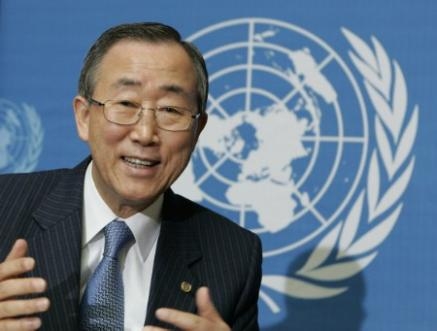
The head of the United Nations
LEXINGTON, KY -- The United Nations Human Rights Office has released a new publication, Born Free and Equal (download), which outlines core legal obligations that countries have for their LGBT people. The guide is built around five core expectations: protect people from homophobic violence, prevent torture, decriminalize homosexuality, prohibit discrimination, and safeguard LGBT people’s freedoms of expression, association, and peaceful assembly.

“What we are witnessing it the issue of LGBTI equality finally being placed front and center on the world stage,” stated Kentucky Equality Federation President Jordan Palmer. “We at Kentucky Equality Federation, a voting member of ILGA at the United Nations applaud the leadership of Secretary-General Ban-Ki Moon, the head of the United Nations.”

United Nations Secretary-General Ban-Ki Moon stated: “To those who are gay, lesbian, bisexual or transgender, let me say — you are not alone. Your struggle for an end to violence and discrimination is a shared struggle. Any attack on you, is an attack on the universal values the United Nations and I have sworn to uphold. Today, I stand with you and I call upon all countries and people to stand with you too. A historic shift is under way — more states see the gravity of the problem….We must tackle the violence, decriminalize consensual same-sex relationships, end discrimination and educate the public.” (watch)

The full list includes many policies that most States in the United States does not have in place:

  • Protect people from homophobic and transphobia violence.
  • Include sexual orientation and gender identity as protected characteristics in hate crime laws.
  • Establish effective systems to record and report hate-motivated acts of violence.
  • Ensure effective investigation and prosecution of perpetrators and redress for victims of such violence.
  • Asylum laws and policies should recognize that persecution on account of one’s sexual orientation or gender identity may be a valid basis for an asylum claim.
  • Prevent the torture and cruel, inhuman and degrading treatment of LGBT persons in detention by prohibiting and punishing such acts and ensuring that victims are provided with redress.
  • Investigate all acts of mistreatment by State agents and bring those responsible to justice.
  • Provide appropriate training to law enforcement officers and ensure effective monitoring of places of detention.
  • Repeal laws criminalizing homosexuality, including all laws that prohibit private sexual conduct between consenting adults of the same sex.
  • Ensure that individuals are not arrested or detained on the basis of their sexual orientation or gender identity, and are not subjected to baseless and degrading physical examinations intended to determine their sexual orientation.
  • Prohibit discrimination on the basis of sexual orientation and gender identity.
  • Enact comprehensive laws that include sexual orientation and gender identity as prohibited grounds of discrimination. In particular, ensure non-discriminatory access to basic services, including in the context of employment and health care.
  • Provide education and training to prevent discrimination and stigmatization of LGBT and intersex people.
  • Safeguard freedom of expression, association and peaceful assembly for LGBT and intersex people. Any limitations on these rights must be compatible with international law and must not be discriminatory.
  • Protect individuals who exercise their rights to freedom of expression, association and freedom of assembly from acts of violence and intimidation by private parties.

Last December, the United Nations Human Rights Council released a report about the extensive rates of LGBT persecution across the globe.

United Nations Secretary General Ban-Ki Moon has called for an end to this discrimination. (previous press release)